24/7 Professional Scaffolding Services
Call Us Anytime 07796 223639

How Much Scaffolding Do I Need?
One of the most common questions we’re asked is: “How much scaffolding do I actually need for my project?” It’s a fair question and the honest answer is that it depends on the property, the work being carried out, and how much access is required to do the job safely and efficiently. This guide explains how scaffolding requirements are typically assessed, what affects the amount needed, and why professional advice is always recommended before work begins. If you’re planning building, roofing, or maintenance work, this will give you a clear idea of what to expect.
Why Scaffolding Size Matters
Scaffolding isn’t just about reaching height. It’s about providing a safe, stable working platform that allows tradespeople to move freely, store materials, and complete work without risk.
Too little scaffolding can slow the job down, increase labour costs, and compromise safety. Too much can be unnecessary and more expensive than required. The right setup strikes a balance between access, safety, and efficiency.


The Main Factors That Determine How Much Scaffolding You Need
Property Type and Height
The size and shape of the building plays a major role. A single-storey bungalow will require far less scaffolding than a three-storey townhouse, while Victorian terraces and older properties often need more complex setups due to rooflines and access restrictions.
Two-storey homes typically require scaffolding that reaches gutter height, often with at least one working lift. Taller properties may need additional lifts to allow work at different levels.
Type Of Work Being Carried Out
Different jobs require different access. Roof replacements, chimney work, solar panel installation, and loft conversions usually require full edge protection and continuous access along rooflines. Rendering or repointing often needs full elevation coverage so work can be carried out evenly. Smaller jobs, such as window replacements or minor repairs, may only need partial scaffolding or a single elevation.
The more involved the work, the more comprehensive the scaffolding usually needs to be.


How Much of the Property Needs Access
Scaffolding can be erected to the front only, rear only, both elevations, or fully wrapped around the building. Front-only scaffolding is common for roofing or guttering where rear access isn’t required. Full wrap scaffolding is more typical for extensions, refurbishments, or major external works where multiple trades are working at once.
Corners, returns, and side access also add to the overall size.
.png)

Ground Conditions and Surroundings
The space available around the property affects how scaffolding is designed.
Narrow pavements, sloped driveways, conservatories, garages, or neighbouring buildings can all influence how scaffolding is erected. In some cases, additional structure is required to bridge over obstacles or avoid ground pressure on fragile surfaces.
If scaffolding needs to be placed on a public pavement or road, a permit from the local authority is usually required.


Safety and Regulations
UK scaffolding must meet strict safety standards. Guardrails, toe boards, proper access ladders, and secure foundations are not optional extras, they are essential parts of a compliant scaffold.
This means that even a “small” scaffold may be larger than expected once safety requirements are factored in.
Typical Scaffolding Requirements By Project Type
Scaffolding For a Typical Two Storey House
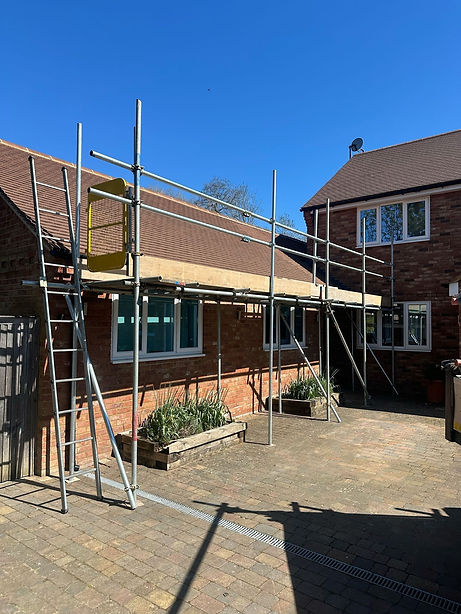
For most two-storey houses, scaffolding is erected to gutter height with one or two working lifts. If roof work is involved, edge protection along the roofline is standard.
If work is only being carried out at the front, scaffolding may be limited to that elevation. For full roof access, it’s common to scaffold both front and rear.
Scaffolding For Roof Repairs or Replacement
Roofing work almost always requires full elevation access, especially for re-roofing, chimney repairs, or ridge work. Scaffolding will usually run along the entire length of the roof, often on both sides of the property.
Temporary roofing or additional protection may be required for longer projects or during poor weather.

Scaffolding For Extensions and Renovations
Extensions and major renovations typically require more extensive scaffolding. This can include multiple lifts, internal access, and wrap-around structures to allow different trades to work safely at the same time.
These projects often evolve as work progresses, so flexibility in the scaffold design is important.
Scaffolding For Commercial Buildings
Commercial scaffolding varies widely depending on building size, height, and usage. Warehouses, offices, and retail units often require bespoke designs to allow continued access for staff or the public while work is carried out. In these cases, scaffolding is almost always planned following a site survey and risk assessment.
Why It's Not Advisable To Guess
Online estimates and rough measurements can be misleading. Two properties that look identical from the street can require very different scaffolding setups once access, ground conditions, and the scope of work are assessed.
Attempting to reduce costs by under-specifying scaffolding often leads to delays, adjustments mid-project, or additional charges later on. In the worst cases, it can compromise safety.
A professional assessment ensures the scaffold is designed correctly from the start.


How Scaffolding Is Properly Assessed
A reputable scaffolding company will usually carry out a site visit or request detailed photos and measurements before providing a quote. During this process, they will assess access points, ground conditions, height requirements, and any potential hazards.
This allows the scaffold to be designed specifically for your project, rather than relying on assumptions.
Get Expert Advice Before You Start
While this guide gives a general idea of how scaffolding requirements are determined, every project is different. The safest and most cost-effective way to know exactly how much scaffolding you need is to speak to a professional.
Maguires Scaffolding provides residential and commercial scaffolding across Buckinghamshire and Berkshire. If you’re unsure what setup your project requires, you can send photos or request a site visit and receive clear, honest advice tailored to your property.
Getting the scaffolding right from day one keeps your project safe, compliant, and running smoothly.
